What Is IP Geolocation? How It Works & Accuracy
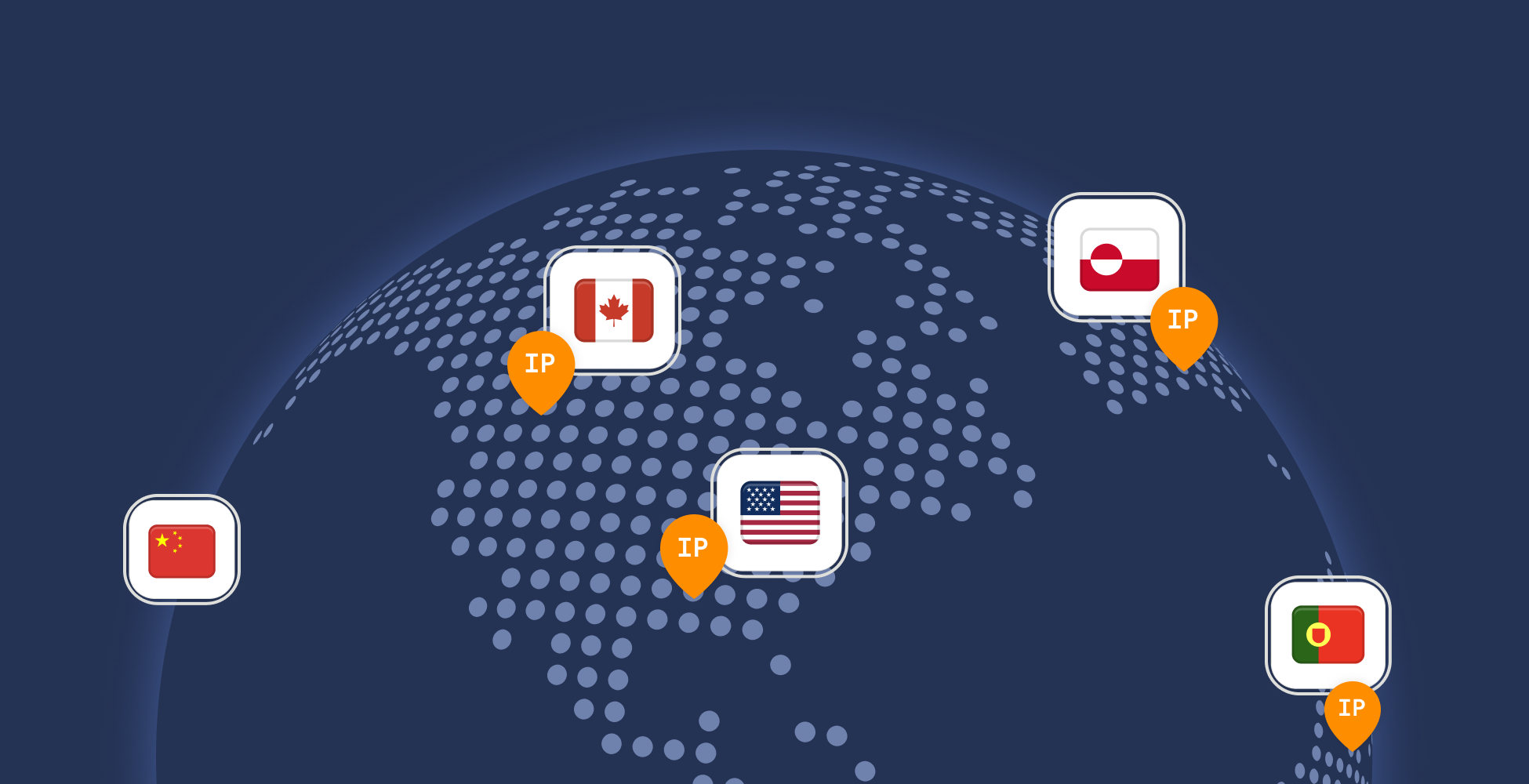
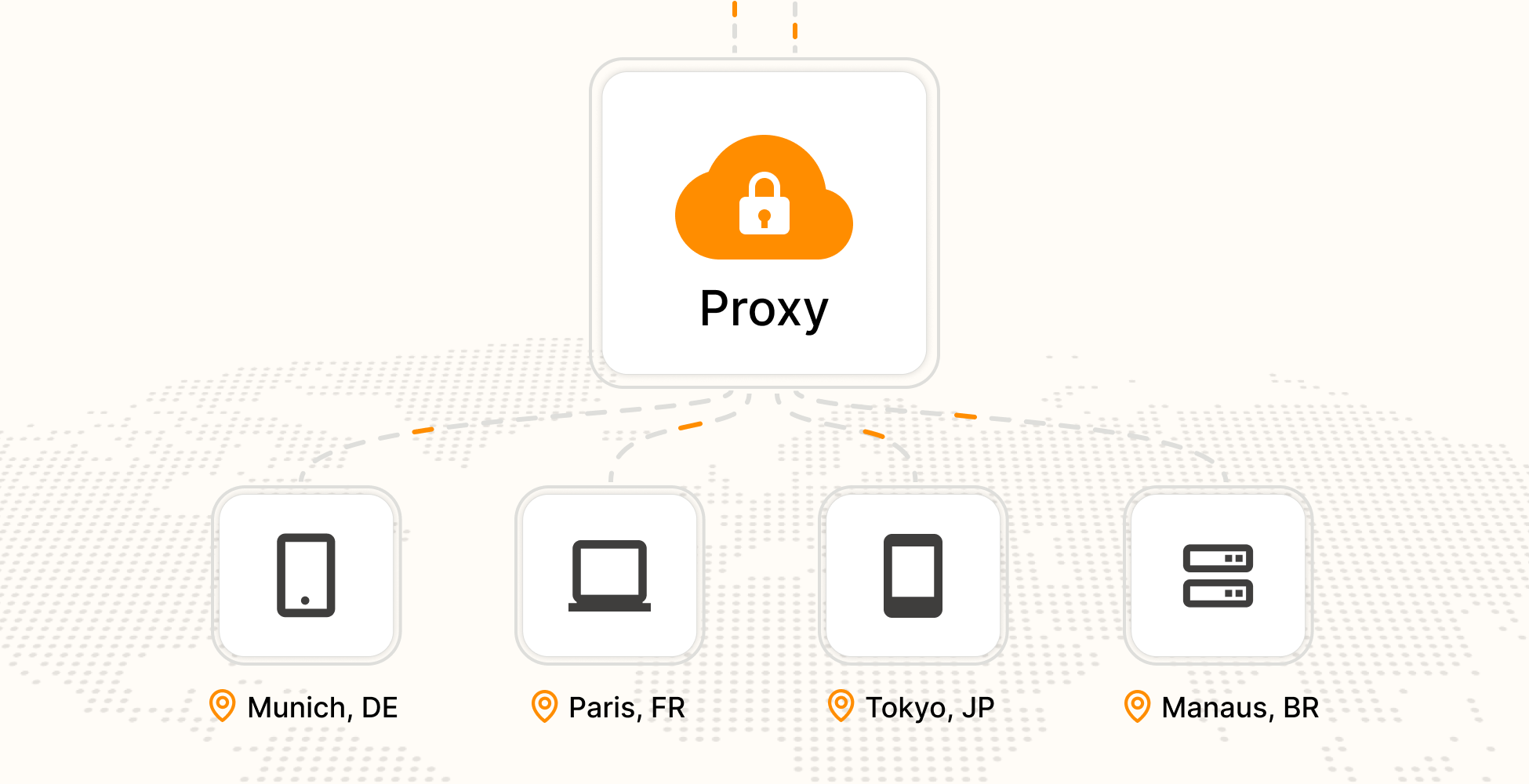
You open a website and it greets you in German, suggests nearby stores, or blocks a video with "not available in your region." No GPS is involved. The site looked at your IP address, ran it through a geolocation database, and made a guess about where you are.
IP geolocation is the process of estimating a device's geographic location based on its IP address. By cross-referencing the IP against databases of known address allocations, providers can approximate the country, region, city, and sometimes postal code of the connection without requiring any input from the user or access to GPS hardware.
That estimate is useful for content localization, ad targeting, and compliance filtering. It is also one of the first signals that fraud detection and bot protection systems evaluate when a request arrives. With roughly one in three internet users worldwide now connecting through a VPN, the assumption that an IP address reflects a real location is weaker than ever. Anyone with a VPN or proxy can defeat geolocation, and accuracy drops sharply below the country level.
This article walks through how IP geolocation works, where its accuracy falls apart, and why modern bot detection treats it as one input in a larger signal stack rather than a standalone defense.
How IP Geolocation Works
IP Address Allocation and Regional Registries
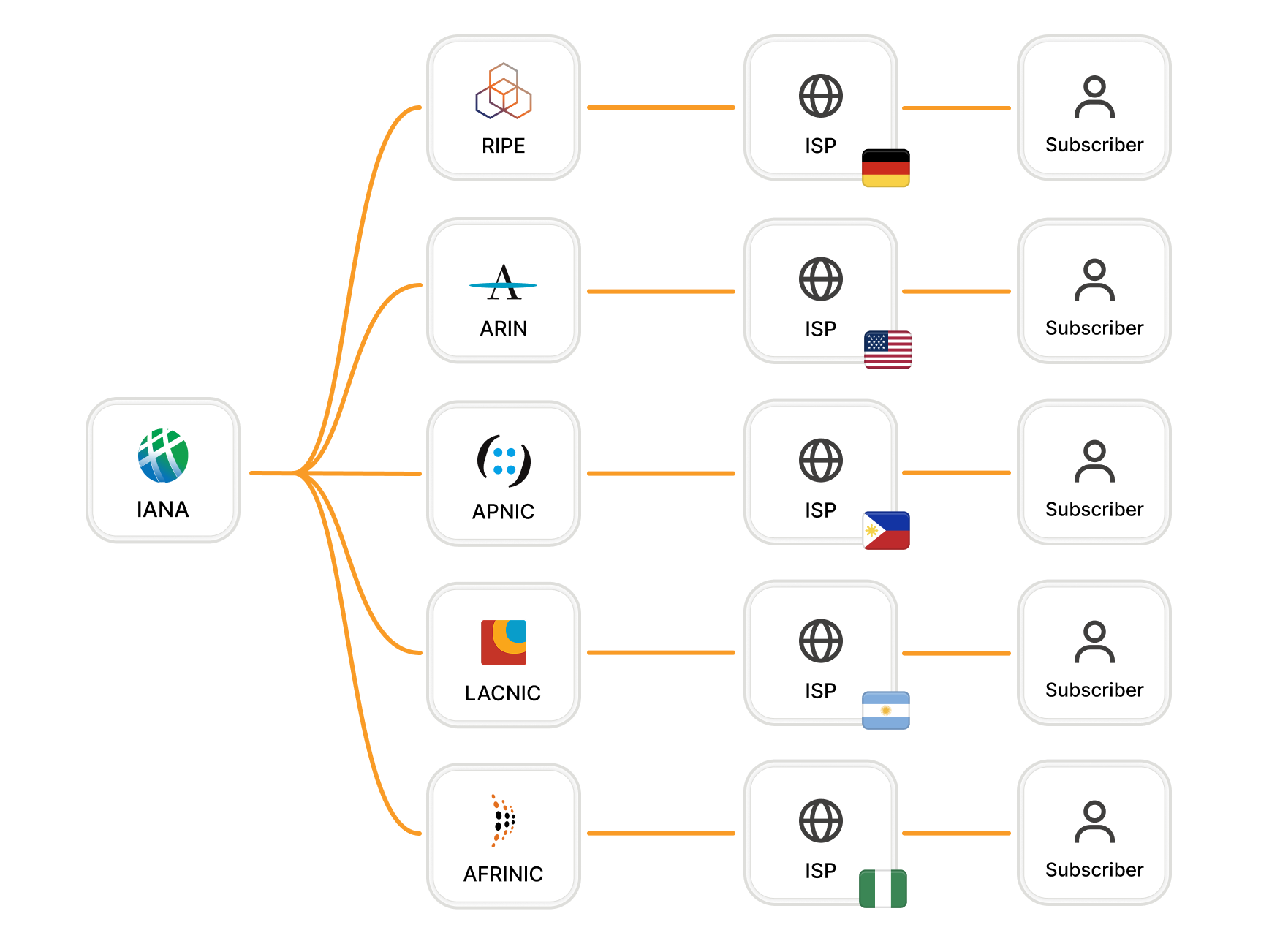
The reason IP geolocation works at all is that IP addresses are not assigned randomly. The Internet Assigned Numbers Authority (IANA) delegates large blocks of IP addresses to five Regional Internet Registries: RIPE NCC covers Europe, the Middle East, and Central Asia. ARIN handles North America. APNIC serves the Asia-Pacific region. LACNIC manages Latin America and the Caribbean, and AFRINIC covers Africa.
Each RIR allocates ranges to ISPs and large organizations within its territory. ISPs then assign individual IPs or small blocks to subscribers. This creates a hierarchical chain from continent to country to ISP to approximate geographic area. A block assigned to Deutsche Telekom by RIPE NCC is almost certainly in Germany, and that inference is what makes country-level geolocation reliable.
The picture gets muddier at the edges. IPv4 address exhaustion has led to address trading across regions. A block originally allocated to an Asian ISP may have been sold to a European one, and geolocation databases sometimes lag behind the transfer. IPv6 adoption introduces newer blocks that databases may not yet map with high confidence.
How Geolocation Databases Are Built
Registry data from IANA and the RIRs provides the foundation. Through Whois and RDAP lookups, geolocation providers can determine which organization holds a given IP block and where that organization is registered. This gets you to country level, and sometimes to a region, with strong confidence.
Refining beyond that requires active enrichment. Providers use a combination of latency-based triangulation (pinging IP addresses from known locations and estimating proximity from round-trip times), Wi-Fi SSID correlation, user correction submissions, ISP partnership data, and commercial datasets. The resulting databases are updated on regular cycles, typically weekly to monthly for commercial providers.
A geolocation database is a probabilistic map. Every entry is an educated guess based on the evidence available when the database was last updated. The quality of city-level and postal-code-level data depends heavily on the provider's enrichment methods and the region being mapped. Urban areas in developed markets are covered far more accurately than rural areas in developing ones.
The Lookup Process
When a visitor loads a web page, the server sees the source IP address of the incoming request. A geolocation lookup passes that IP to either a local database file or a remote API.
The response typically includes a country code, region or state, city name, postal code, approximate coordinates, ISP name, and ASN (Autonomous System Number). Local databases like MaxMind's .mmdb files deliver microsecond lookups but require regular updates. API services stay current automatically but introduce network latency and a third-party dependency.
The entire process is a static lookup against pre-computed data. No real-time measurement or triangulation happens at query time. The coordinates returned are typically the centroid of a postal code area or city, not a precise pinpoint on a map.
How Accurate Is IP Geolocation?
If you need to localize a website, country-level geolocation is reliable enough. City-level is a reasonable guess. Postal code is a coin flip. The accuracy difference between these levels matters for any application that depends on geographic precision.
[1] Accuracy ranges are approximate and vary by provider, region, and connection type. Providers like MaxMind publish their own accuracy statistics, but independent verification across providers is limited.
Country vs. City vs. Postal Code Accuracy
Country-level identification works because RIR allocation data maps IP blocks directly to countries. Unless a block has been transferred across regions and the database has not caught up, this layer is solid.
Region and state accuracy sits around 80–90%, depending on ISP structure. In countries where ISPs operate regionally, region data tends to be strong. In smaller European nations where a single ISP covers the entire country, the database may default to the capital city or the ISP's headquarters.
City-level accuracy is where the sharpest drop occurs. Estimates range from 50–80% depending on the region, connection type, and provider. Dense urban ISP infrastructure produces better mappings, while rural connections frequently resolve to the nearest city with a registered ISP presence.
Postal code accuracy drops further, often to 20–50%. Many providers return the centroid of a city or district rather than a genuine postal-code-level match. For most security use cases, this margin of error is too wide to act on with confidence.
What Degrades Accuracy
Even those baseline numbers assume a clean, direct connection between the user and your server. Several common network configurations make the results worse.
VPNs and proxies are the most obvious factor. A user in Berlin connecting through a VPN exit node in São Paulo will geolocate to São Paulo. Commercial VPN usage has grown significantly over the past decade. Residential proxies push evasion further because the exit IP belongs to a real ISP subscriber, making the spoofed location indistinguishable from a genuine local connection.
Carrier-grade NAT (CGNAT) is less visible but increasingly common. Many ISPs, especially mobile carriers and those operating in IPv4-depleted regions, share a single public IP address among hundreds or thousands of subscribers. Geolocation returns one location for all of them, and that location may be the ISP's gateway facility rather than any subscriber's actual area.
Mobile networks introduce their own distortion. As a device moves between cell towers and regions, it may be assigned IPs from pools that geolocate to the carrier's central office. A user in Munich using Vodafone might geolocate to Düsseldorf because that is where the carrier's address pool is registered. Corporate proxies and CDN exit nodes create similar centralization — a company's employees across Europe may all appear to originate from London because that is where the corporate proxy sits.
IPv6 transition affects newer allocations. IPv6 blocks have less historical data behind them, and geolocation databases have had less time to refine their mappings. Accuracy for IPv6 addresses is generally lower than for well-established IPv4 ranges, though it continues to improve.
Every VPN connection, every CGNAT pool, every corporate proxy is a reminder that IP addresses identify network endpoints, not people. For teams evaluating how IP signals fit into their detection stack, this is why geolocation works best as one input among many.
IP Geolocation in Bot Detection and Fraud Prevention
Common Security Applications
Despite its accuracy limits, geolocation provides genuinely useful signals when you apply it correctly in security contexts. The key is treating it as one input to a risk score, not as a verdict.
Impossible travel detection is one of the best-established patterns. If an account logs in from Frankfurt at 14:00 and from Jakarta at 14:08, at least one of those sessions is not legitimate. The detection is straightforward, and while VPNs can occasionally trigger false positives, the signal is strong enough to warrant further scrutiny on any flagged session.
Timezone-geolocation consistency compares the browser's system timezone (exposed via JavaScript) against the IP's geographic location. If the IP geolocates to Tokyo but the browser timezone is set to US Eastern, the mismatch is a useful risk signal. Legitimate travelers occasionally produce this pattern too, so it works best as a weighting factor in a composite score.
Geographic anomaly scoring and geo-fencing round out the common applications. Anomaly scoring evaluates login geography against an account's history — for authenticated users who typically sign in from Berlin, a sudden session from Lagos raises the risk score. Geo-fencing restricts or flags traffic from specific regions for compliance purposes, such as sanctions enforcement or regional licensing. Both are effective as first-pass signals, though determined users can circumvent geo-fencing with proxies.
Geolocation tells you where the request claims to be from. Combined with other signals, it helps you decide whether to believe it.
Why Geolocation Alone Is Not Enough
The security applications above work until the attacker controls the IP signal. Residential proxies give attackers exactly that control. Commercial residential proxy providers offer IPs selectable by country and city. An attacker targeting a German bank can route through a residential IP in Frankfurt, and the geolocation signal will match perfectly. There is nothing in the IP data to suggest anything unusual.
Consistent spoofing is cheap. Sophisticated automation frameworks set the browser timezone, locale, and language headers to match the selected proxy's geography, defeating timezone-geolocation mismatch checks at minimal cost.
The fundamental limitation is structural because geolocation identifies where a network endpoint is registered. It says nothing about who is behind it or what they intend to do. When the attacker selects the endpoint, the geographic signal loses its defensive value as a standalone check.
Geolocation retains its value when combined with signals the attacker cannot easily control: browser environment integrity, behavioral patterns during interaction, and computational proof-of-work. The architectural argument here is that no single signal needs to be undefeatable on its own. What matters is that defeating all signals simultaneously is expensive enough to break the attacker's economics.
How CaptchaFox Uses IP Signals for Smarter Bot Detection
CaptchaFox evaluates IP-derived signals (geolocation, ASN, IP reputation, and known proxy status) as inputs to a broader risk assessment rather than as standalone decision points. A mismatch between IP location and browser timezone raises the risk score, but no single mismatch triggers a block on its own.
One of those layers is a dedicated residential proxy IP database. CaptchaFox leverages such a database by sourcing millions of IPs from residential proxy provider networks. When a request arrives from a known proxy IP, the system flags it before the verification flow begins. This proactive intelligence layer catches proxy-routed traffic that geolocation alone would mark as legitimate.
All of this runs on a privacy-first architecture. CaptchaFox is hosted on EU infrastructure in Germany with GDPR compliance built in. There are no cookies and no persistent personal data storage, the system uses IP and behavioral data solely for the detection task, then discards it. The verification flow is designed to meet WCAG accessibility standards. The API is reCAPTCHA-compatible, so teams migrating from other providers can switch with minimal code changes. Plans start at EUR 15 per month with a 7-day trial.
Start your trial and see how CaptchaFox protects your site without compromising on privacy or user experience.
FAQ
How accurate is IP geolocation?
Country-level accuracy is approximately 99% with major providers, making it reliable for content localization and broad geographic filtering. City-level accuracy drops to roughly 50–80%, depending on the region and connection type. Postal code accuracy is generally unreliable. These baselines assume a direct connection. VPNs, carrier-grade NAT, mobile networks, and corporate proxies all push accuracy lower. For security applications, this variability means a system that makes blocking decisions based on city-level geolocation alone will produce both false positives and false negatives. CaptchaFox uses geolocation as one signal in a multi-layered detection stack. Combined with behavioral analysis, environment checks, IP reputation, and proof-of-work, the assessment does not depend on any single signal being accurate.
Can IP geolocation be fooled?
Yes. Any VPN or proxy service can replace a user's real IP with one in a different location. Residential proxies are the most effective evasion method because the replacement IP belongs to a real ISP subscriber, passing all legitimacy checks that would flag a datacenter IP. Sophisticated bots go further by matching their browser timezone, locale, and language headers to the selected proxy's geography, defeating consistency checks. CaptchaFox addresses this by combining IP intelligence, including a dedicated residential proxy IP database built from millions of proxy provider IPs, with behavioral analysis, browser environment checks, and proof-of-work challenges. Even when the geolocation signal is spoofed, the other layers detect automation.
Is IP geolocation data considered personal data under GDPR?
The Court of Justice of the EU ruled in Breyer v. Bundesrepublik Deutschland (Case C-582/14) that dynamic IP addresses can constitute personal data under certain conditions. This ruling is widely understood as establishing that IP addresses, and by extension data derived from them such as geolocation, fall within the scope of data protection regulation. Whether a specific implementation requires a particular legal basis or additional safeguards is something each organization should evaluate in its own regulatory context. CaptchaFox analyzes IP signals for bot detection purposes without setting cookies, without persistent personal data storage, and without using the data for any purpose beyond the detection task. All processing happens on EU infrastructure in Germany.
How is IP geolocation used in bot detection?
Bot detection systems use geolocation for geographic anomaly scoring, which flags requests from locations unusual for a given account or user population. Impossible travel detection catches near-simultaneous sessions from geographically distant locations. Timezone-geolocation consistency checks compare the browser's reported timezone against the IP's geographic location. Geo-fencing restricts or flags traffic from specific regions for compliance purposes. All of these applications are stronger as inputs to a combined risk score than as standalone rules. CaptchaFox uses geolocation alongside its residential proxy IP database, behavioral analysis, environment integrity checks, and proof-of-work to build an adaptive risk assessment that does not rely on any single signal.
About CaptchaFox
CaptchaFox is a GDPR-compliant solution based in Germany that protects websites and applications from automated abuse, such as bots and spam. Its distinctive, multi-layered approach utilises risk signals and cryptographic challenges to facilitate a robust verification process. CaptchaFox enables customers to be onboarded in a matter of minutes, requires no ongoing management and provides enterprises with long-lasting protection.
To learn more about CaptchaFox, talk to us or start integrating our solution with a free trial.